Advanced Dry Eye & Ocular Surface Disorders Care
Dry Eye & Ocular Surface Disorders
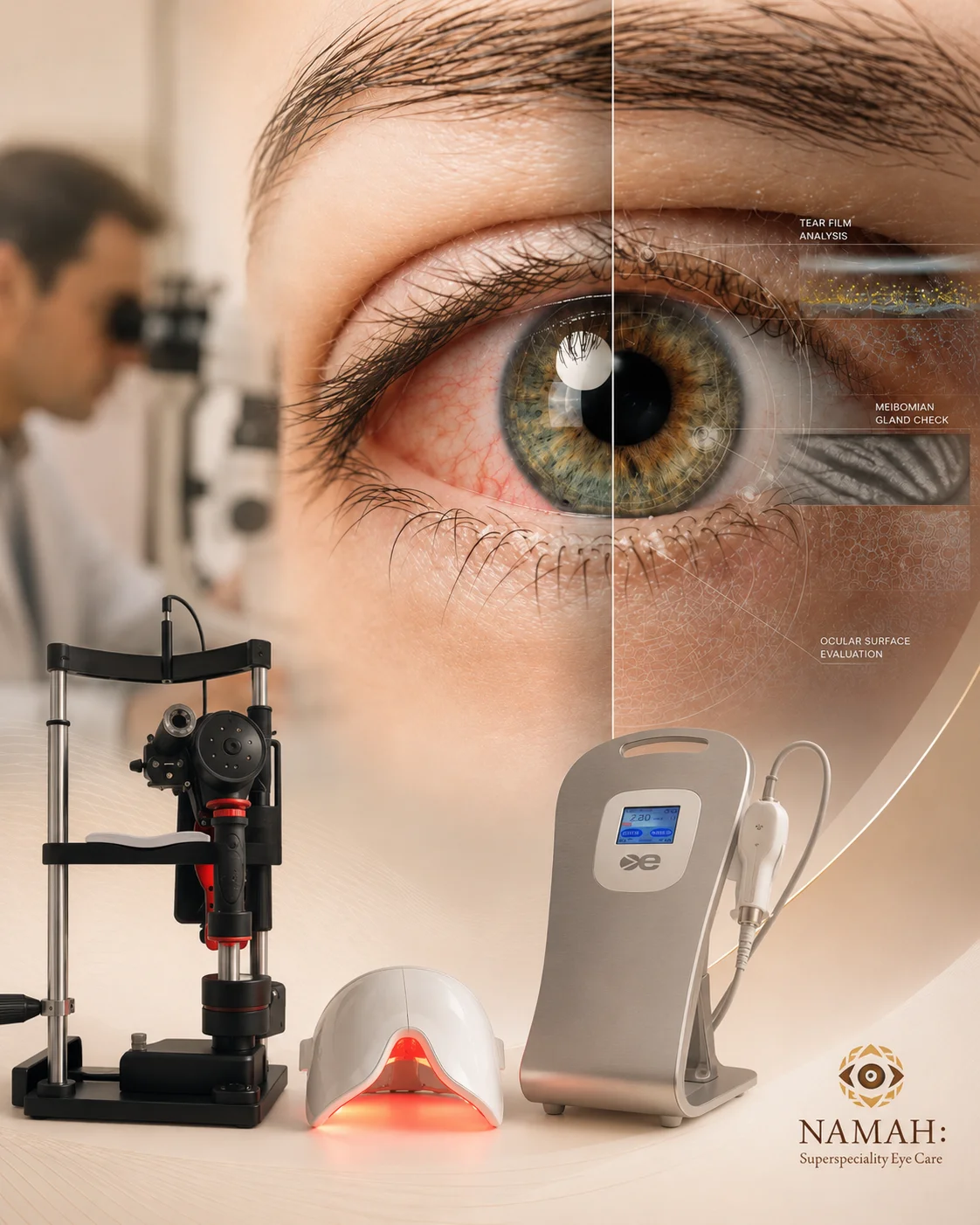
Dry eye is one of the most common eye conditions today, especially with increasing screen use, air-conditioned environments, pollution, contact lens wear and previous eye surgeries. But dry eye is not always just a “lack of tears”, and it is not always solved by using random lubricating drops.
Dry eye may be caused by tear film instability, meibomian gland dysfunction, eyelid inflammation, reduced blinking, ocular surface disease or a combination of these factors.
At NAMAH Superspeciality Eye Care, dry eye care begins with identifying the cause of dryness and then planning treatment based on the patient's tear film, meibomian glands, eyelids, ocular surface and lifestyle.
What is Dry Eye Disease?
The surface of the eye is protected by a thin tear film. This tear film keeps the eye moist, comfortable and optically smooth for clear vision.
When the tear quantity, tear quality or oil layer of the tear film is affected, the surface becomes unstable. This can lead to burning, watering, irritation, redness, tired eyes and fluctuating vision.
Dry eye is often a chronic condition. The goal is long-term control, comfort and a healthier ocular surface - not just temporary relief.
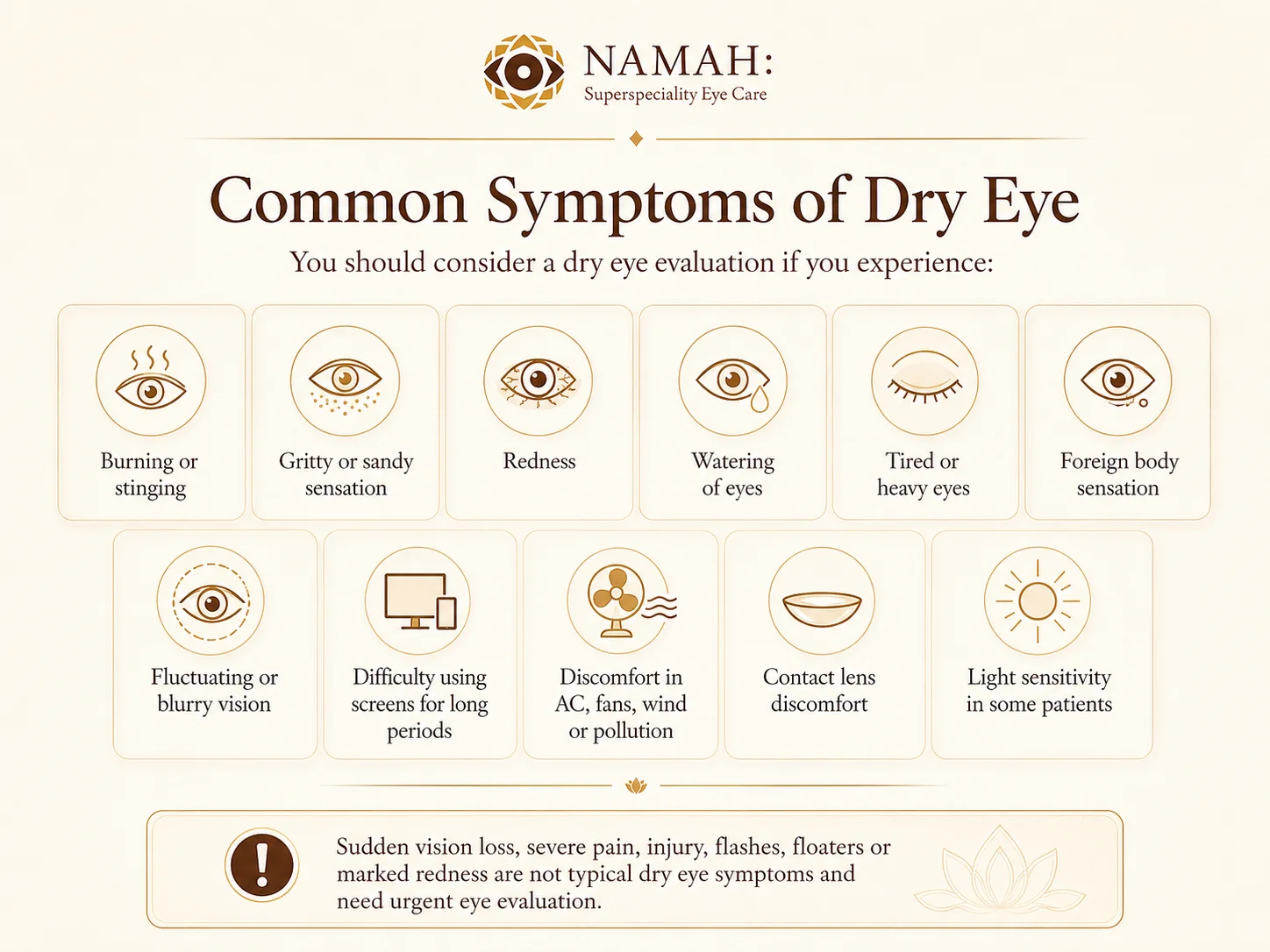
Common Symptoms of Dry Eye
You should consider a dry eye evaluation if you experience:
Burning or stinging
Gritty or sandy sensation
Redness
Watering of eyes
Tired or heavy eyes
Fluctuating or blurry vision
Difficulty using screens for long periods
Foreign body sensation
Discomfort in AC, fans, wind or pollution
Light sensitivity in some patients
Sudden vision loss, severe pain, injury, flashes, floaters or marked redness are not typical dry eye symptoms and need urgent eye evaluation.
Click on the image to zoom in
NAMAH Dry Eye Suite: Understanding the Cause of Dryness
Dry eye treatment should be cause-based. Two patients may have similar symptoms, but the reason for dryness may be completely different.
One patient may have reduced tear production. Another may have evaporative dry eye due to poor meibomian gland function. Some patients may have lid inflammation, allergy, screen-related incomplete blinking or ocular surface disease.
At NAMAH, the Dry Eye Suite is designed to move beyond symptom-based treatment and towards structured evaluation.
Click on the image to zoom in
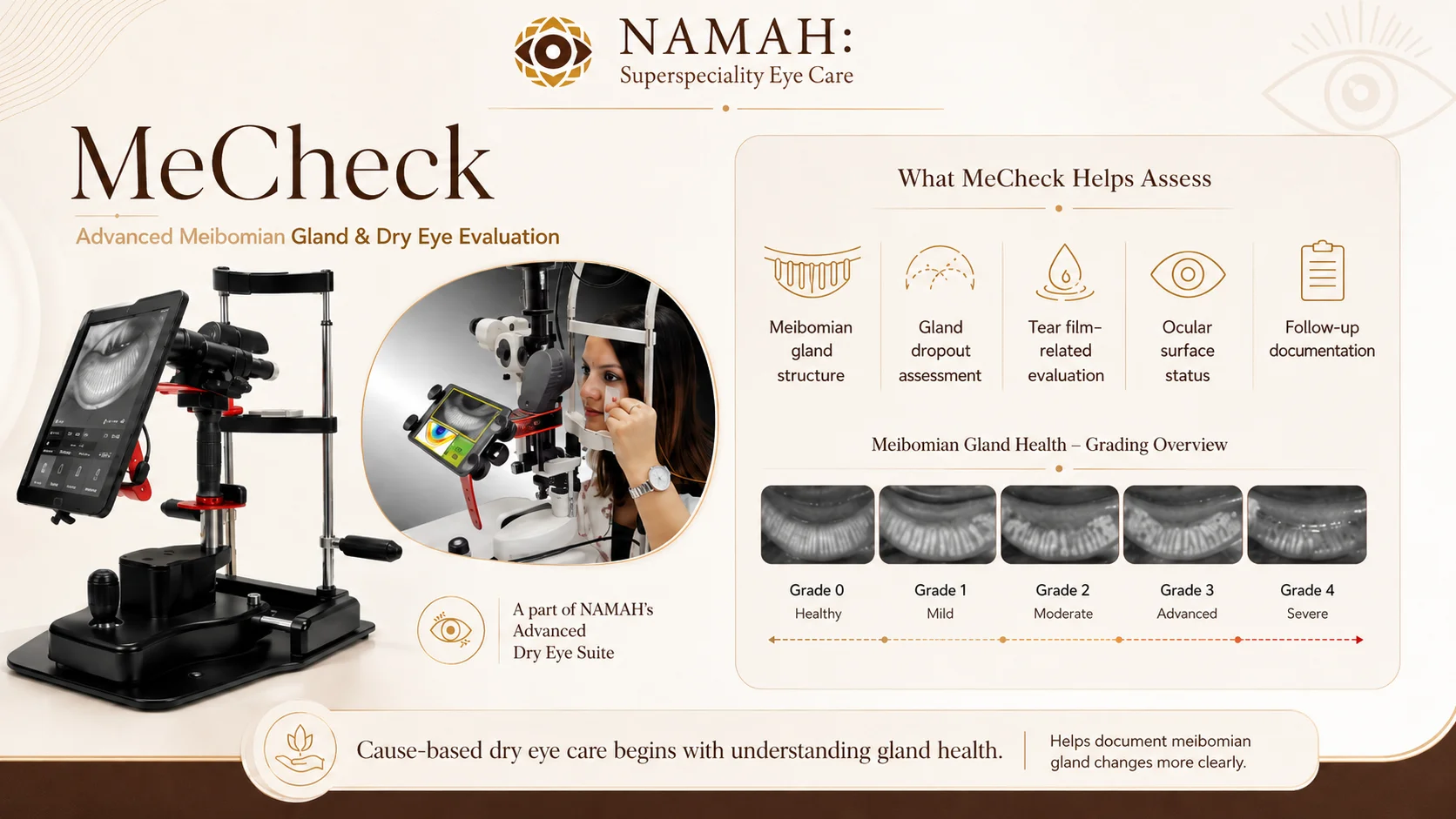
MeCheck: Advanced Meibomian Gland & Dry Eye Evaluation
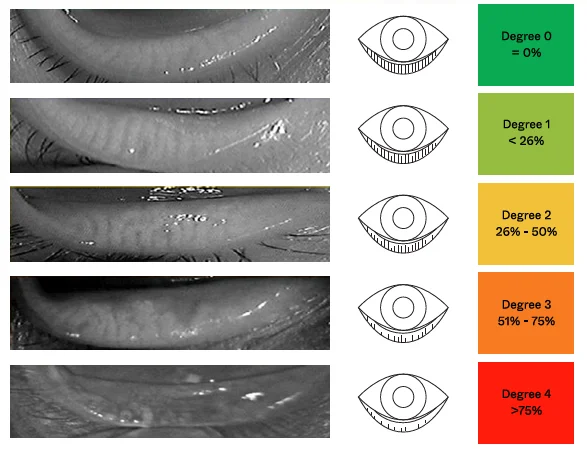
MeCheck helps in evaluating the meibomian glands and key ocular surface parameters in patients with dry eye and meibomian gland dysfunction.
The meibomian glands are oil-producing glands present in the eyelids. This oil layer is important because it prevents the tears from evaporating too quickly. When these glands are blocked, shortened, damaged or poorly functioning, patients can develop evaporative dry eye.
This is one of the most common reasons why patients keep using lubricating drops but continue to feel dryness, burning, watering or fluctuating vision.
Click on the image to zoom in
Why this matters
If the meibomian glands are not functioning well, lubricating drops alone may give only temporary relief. The underlying gland dysfunction also needs to be addressed. This is especially important in patients with screen-related dryness, chronic burning, watering, fluctuating vision, contact lens discomfort, post-surgical dry eye and patients planning cataract or refractive surgery.
Eye-Light: IPL with LLLT / Photobiomodulation for Dry Eye
Eye-Light is an in-clinic dry eye treatment platform that combines IPL and low-level light therapy / photobiomodulation.
It is used in selected patients, especially those with evaporative dry eye and meibomian gland dysfunction. The aim is to support meibomian gland function, reduce lid-related inflammation and improve ocular surface comfort over time.
Eye-Light is not required for every dry eye patient. It is recommended only after evaluation, when the dry eye pattern and gland status suggest that the patient may benefit.
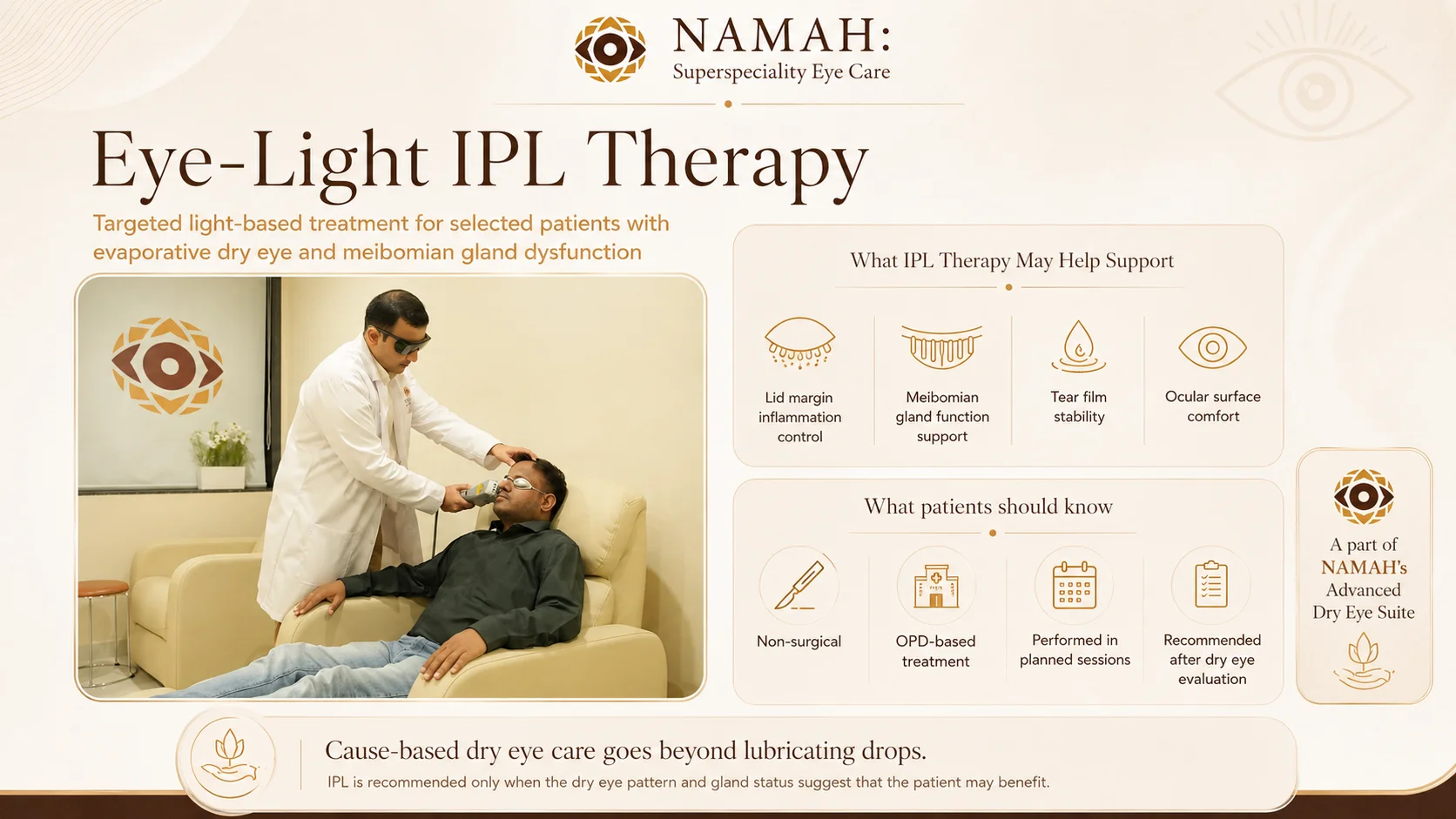
IPL Therapy
IPL uses controlled pulses of light applied around the eyelid and cheek area. In dry eye related to meibomian gland dysfunction, IPL may help by reducing lid margin inflammation, supporting gland function and improving the quality of oil secretion from the meibomian glands.
For patients, this means treatment is directed at one of the common underlying causes of evaporative dry eye, rather than only adding more lubricating drops.
Click on the image to zoom in
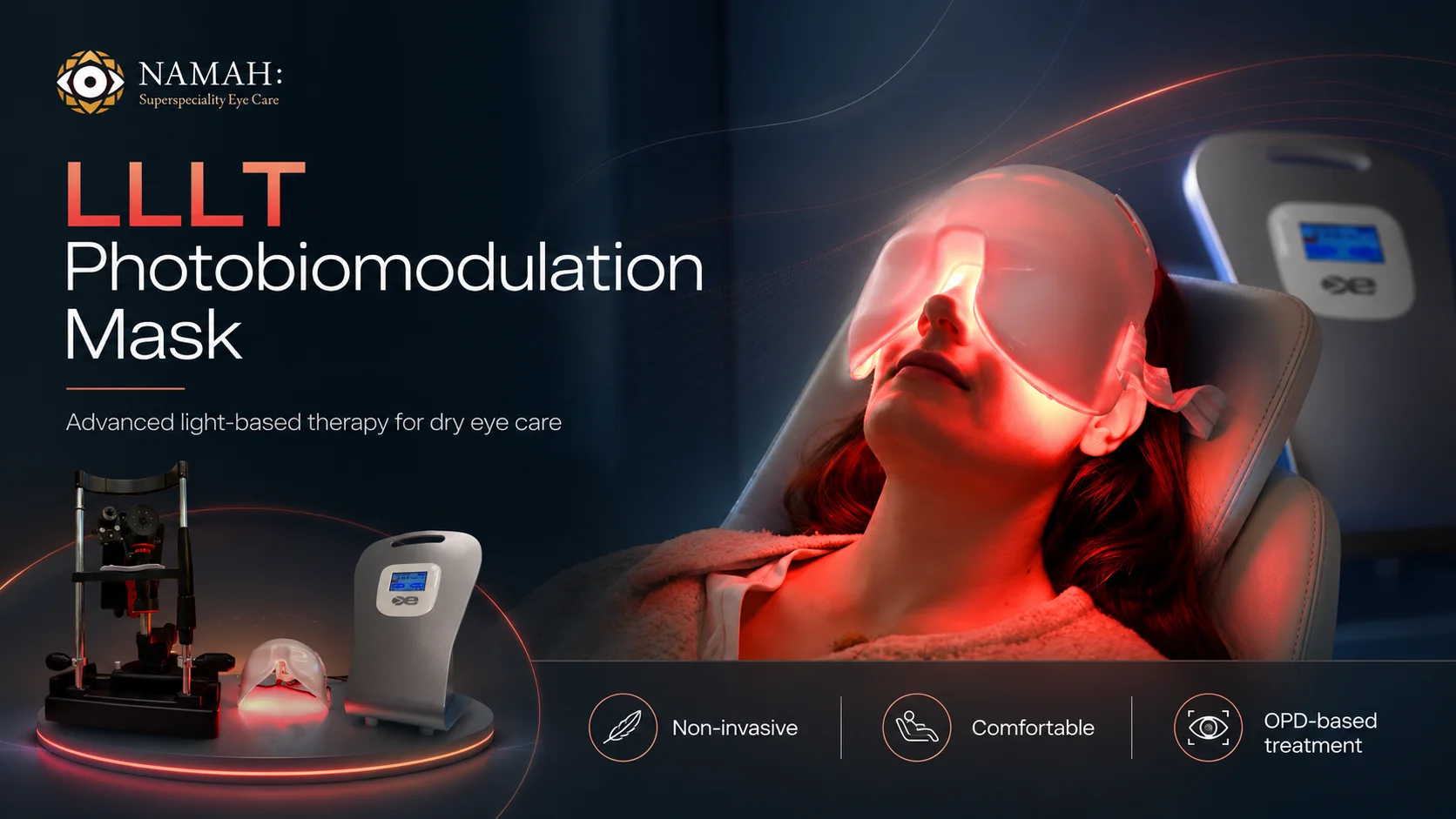
LLLT / Photobiomodulation
Low-level light therapy uses therapeutic light to gently stimulate tissues. In dry eye care, LLLT / photobiomodulation is used to support meibomian gland function, improve eyelid comfort and help reduce inflammation in selected patients.
The treatment is non-surgical, OPD-based and does not involve injections. It is usually performed in planned sessions, depending on the severity of dryness, meibomian gland status and doctor evaluation.
Because dry eye is often chronic, some patients may require maintenance treatment and long-term home care along with in-clinic therapy.
Click on the image to zoom in
Why Dry Eye Treatment Matters Before Cataract or Refractive Surgery
A healthy tear film is important before cataract surgery, premium IOL planning, toric IOL planning, LASIK, ICL and other refractive procedures.
Dry eye can affect quality of vision, corneal measurements, IOL planning and post-operative satisfaction. In some patients, untreated dry eye can also become more noticeable after surgery.
At NAMAH, ocular surface health is assessed as part of advanced cataract and refractive planning, especially in patients considering premium IOLs or spectacle-reducing options.
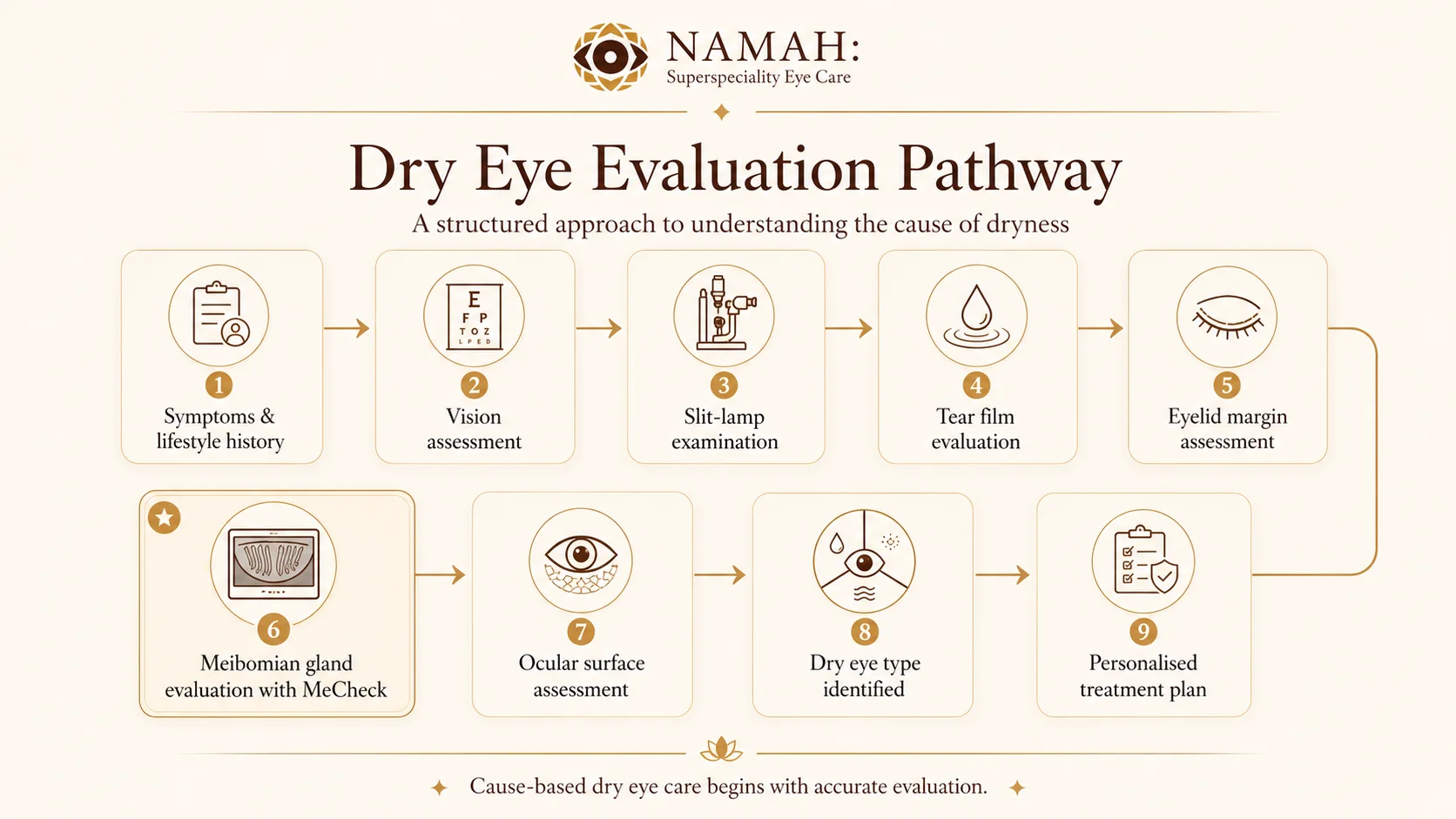
Patient Journey at NAMAH Dry Eye Suite
Symptom and Lifestyle Assessment
We understand your symptoms, screen habits, work environment, contact lens use, medical history and previous eye treatments.
Dry Eye and Meibomian Gland Evaluation
The tear film, eyelids, ocular surface and meibomian glands are assessed clinically and with dedicated dry eye diagnostics when required.
Identification of Dry Eye Type
We identify whether the dryness is evaporative, aqueous-deficient, inflammatory, lid-related, screen-associated or mixed.
Personalised Treatment Plan
Treatment may include home care, prescription drops, lid care, lifestyle changes and Eye-Light IPL + LLLT in suitable cases.
Follow-up, Maintenance and Long-term Control
Dry eye often needs monitoring. Follow-up helps assess response, adjust treatment and maintain ocular surface comfort.
Frequently Asked Questions
Why do my eyes water if I have dry eye?
Dry eye can cause reflex watering. When the eye surface becomes irritated or unstable, the eye may produce excess watery tears, but these tears may not stay on the surface long enough to provide comfort.
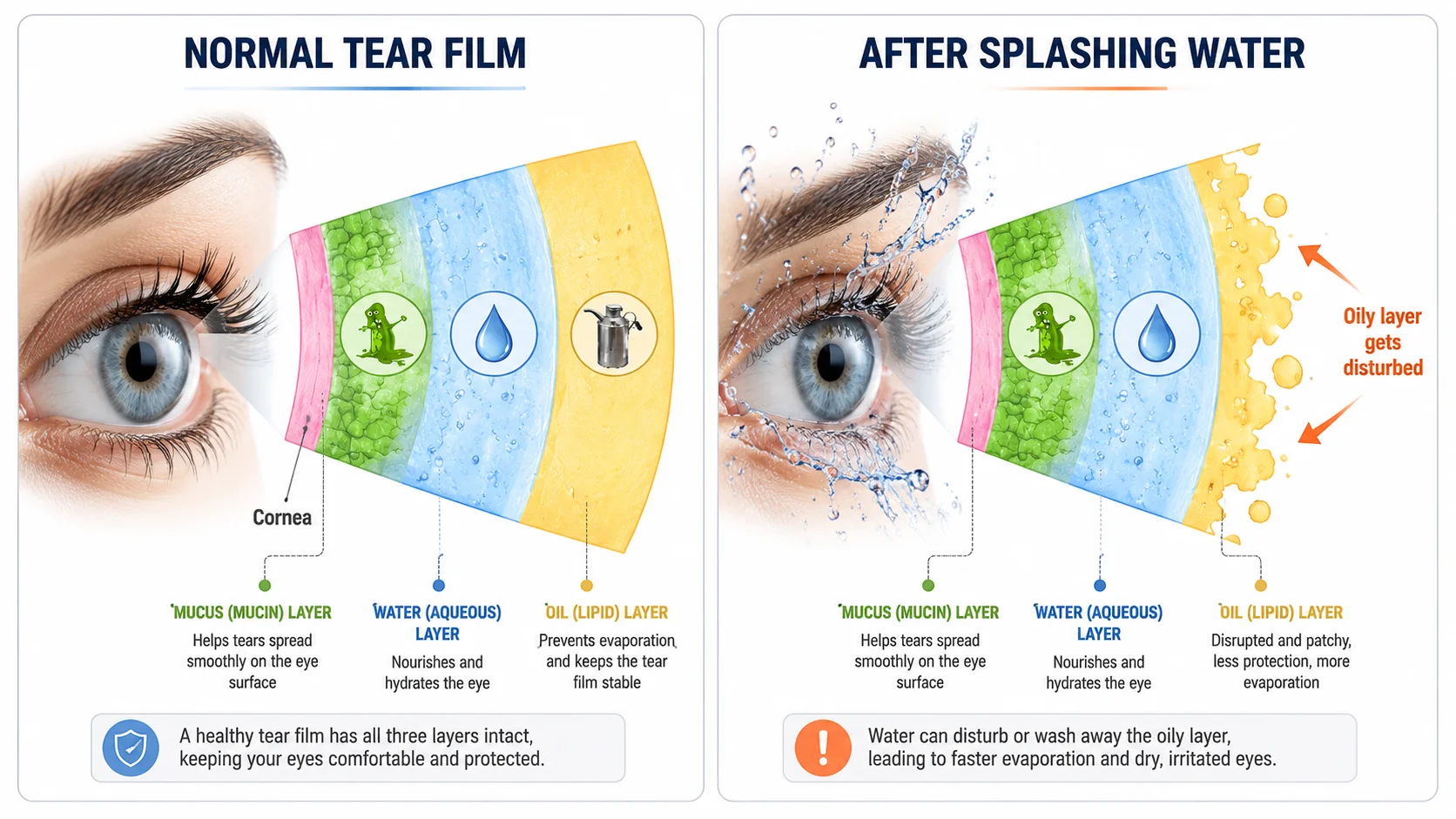
Click on the image to zoom in
Can I splash water in my eyes if I have dry eye?
Splashing water in your eyes gives you temporary relief but is detrimental in the long run. It can disrupt the tear film and also may cause infections
Are lubricating drops enough for dry eye?
Lubricating drops help many patients, but they may not be enough if the underlying problem is meibomian gland dysfunction, eyelid inflammation, allergy, incomplete blinking or ocular surface disease.
What is meibomian gland dysfunction?
Meibomian gland dysfunction is a condition where the oil glands in the eyelids do not function properly. This causes tears to evaporate faster and can lead to burning, watering, irritation and fluctuating vision.
What is MeCheck?
MeCheck is a dry eye and meibomian gland evaluation system that helps assess gland structure and ocular surface parameters. It helps document the cause and severity of dryness more clearly.
What is Eye-Light treatment?
Eye-Light is an in-clinic dry eye treatment platform that combines IPL and LLLT / photobiomodulation. It is used in selected patients, especially those with evaporative dry eye and meibomian gland dysfunction.
Is IPL / LLLT treatment painful?
Most patients tolerate the procedure well. Some may feel warmth or mild sensation during treatment. Suitability, comfort and precautions are assessed before treatment.
How many sessions are required?
The number of sessions depends on the severity of dry eye, meibomian gland status and response to treatment. The treatment schedule is planned after evaluation.
Should dry eye be treated before cataract or LASIK surgery
Yes. A stable tear film is important for accurate measurements, better visual quality and improved post-operative comfort. Dry eye assessment is especially important before premium IOL planning, LASIK, ICL and other refractive procedures.
At NAMAH, dry eye care is built on detailed evaluation, ocular surface diagnostics, meibomian gland assessment and personalised treatment planning.
With the NAMAH Dry Eye Suite, our focus is to identify the cause of dryness, treat the underlying problem where possible, and help patients achieve better comfort, clearer vision and healthier ocular surface over time.