COMPREHENSIVE MYOPIA CARE
MYOPIA Services
Myopia, commonly called short-sightedness or near-sightedness, causes distant objects to appear blurred while near objects may remain clear. It often begins during school-going years and may increase as the child grows. In adults, especially those with high myopia, the condition may also be associated with retinal, macular, optic nerve and cataract-related concerns.

What is myopia?
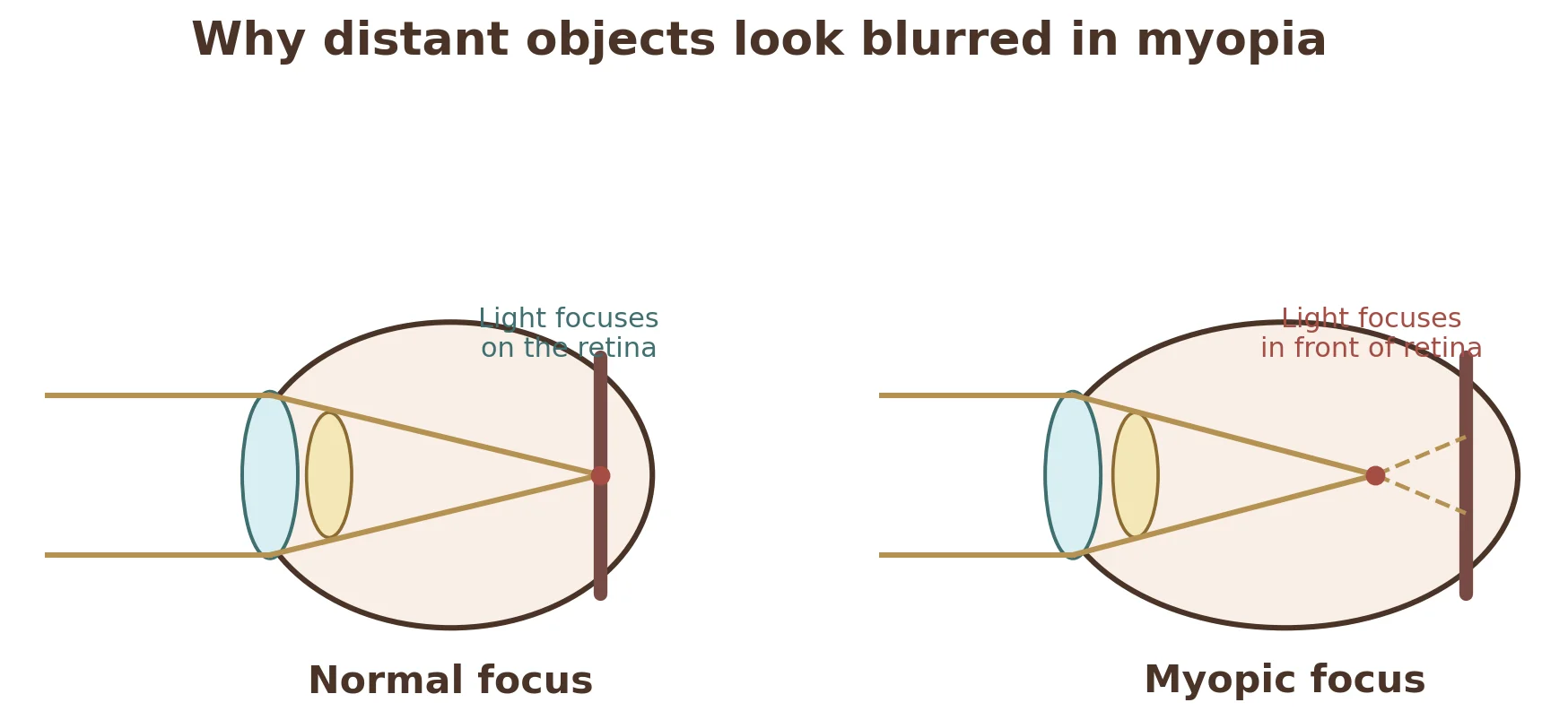
Myopia is a refractive error where the light rays focus in front of the retina. For clear vision, light entering the eye must focus precisely on the retina. In most myopic eyes, the eye has grown longer than expected from front to back. As a result, light from distant objects focuses in front of the retina instead of directly on it.
A minus-powered spectacle or contact lens moves the focus back onto the retina and makes vision clear. This corrects the optical blur, but it does not necessarily address the underlying tendency of the eye to continue elongating during childhood.
Myopia correction, myopia control and myopia management are not the same
Three different goals - often confused
MYOPIA CORRECTION
Makes vision clear now Glasses or contact lenses
MYOPIA CONTROL
Aims to slow further increase in power and eye growth
MYOPIA MANAGEMENT
Assessment + treatment + monitoring over time
Why does childhood myopia deserve attention?
Myopia is increasingly becoming common in children. Certain factors may contribute to the development or progression of myopia in susceptible children:
Genetics/Family history play an important role
Modern visual environmental factors: Long periods of close work with limited breaks, very short working distances, screen use
Insufficient outdoor time
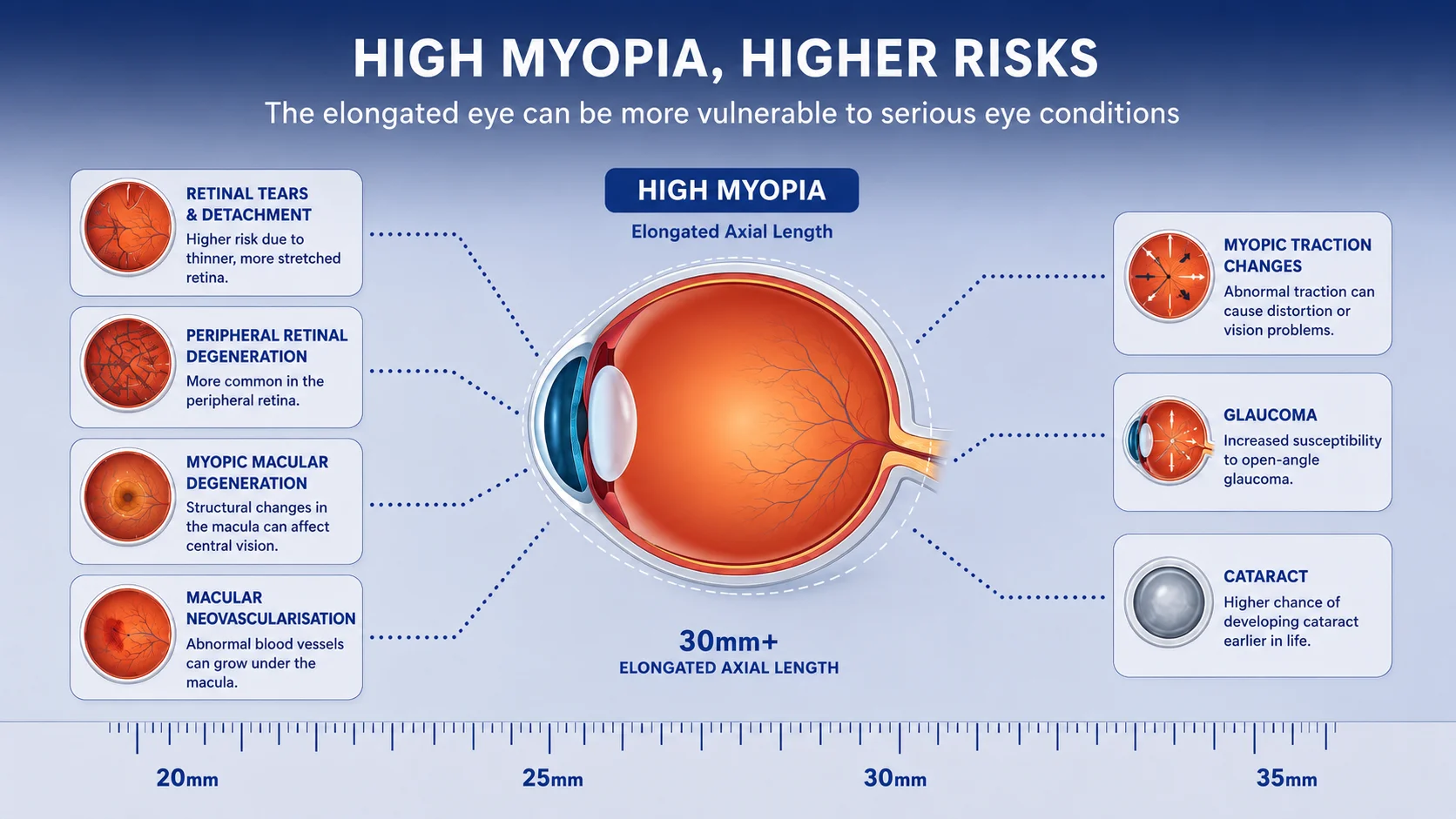
Click on the image to zoom in
Along with an increasing spectacle power, greater axial elongation is also associated with a higher risk of retinal tears and detachment, myopic macular changes, glaucoma and early-onset cataract.
Types of Myopia
Low or moderate myopia
A lesser degree of myopic refractive error, commonly defined as a spherical equivalent of less than -6.00 D. This type of Myopia can usually be corrected well with spectacles or contact lenses.
High myopia
A high degree of myopic refractive error, commonly defined as a spherical equivalent of -6.00 D or more myopic. These eyes require attention to retinal and long-term ocular health.
Pathologic myopia
High myopia associated with structural changes in the retina, such as posterior staphyloma or myopic maculopathy.
Common symptoms of myopia in children
Who should get a Myopia evaluation?
Your child has any of the above symptoms or has been diagnosed with myopia in a school vision screening
The child already has high myopia or has been advised regular retinal checks
Adults with high myopia for diagnosis or monitoring of associated retinal features
One or both parents with myopia, especially high myopia
The spectacle power has increased within the last year
You want to undergo LASIK, SMILE, ICL/IPCL or another refractive procedure and need corneal and retinal suitability assessment
URGENT EVALUATION: New onset floaters, flashes, distortion, a shadow in the field of vision or sudden vision reduction.
Myopia evaluation at NAMAH
Symptoms, ocular history and relevant medical history, family history and daily routine noted for risk assessment
Vision testing, refraction, Orthoptics & Amblyopia assessment, intraocular pressure measurement
Anterior segment evaluation
Cycloplegic refraction after instillation of eyedrops (30-45 mins waiting period)
Dilated optic nerve head and retina examination including peripheral retinal exam by a retina specialist
Diagnostic evaluation: Axial length measurement, Corneal indices such as curvature, topography, Retinal imaging and OCT.
Personalised management plan and follow up schedule discussed with parents
Namah is well-equipped with Advanced Diagnostics for Myopia progression screening
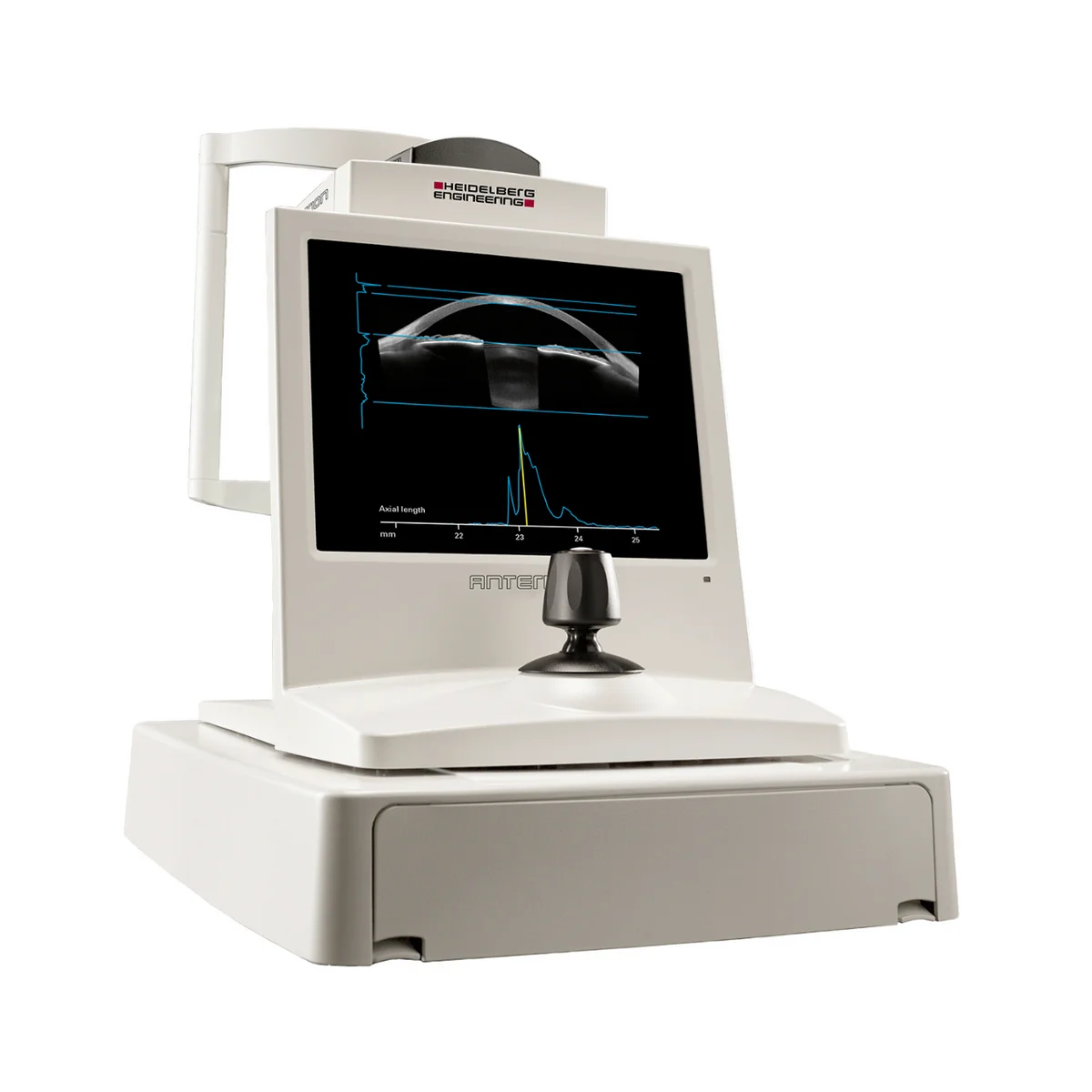
Axial length measurement with ANTERION
Axial length is the front-to-back length of the eyeball. As most childhood myopia is related to axial elongation, serial axial length measurements provide useful information about progress of myopia.
At NAMAH, Axial length can be measured using the Heidelberg Engineering ANTERION Swept-Source OCT platform. The device combines optical biometry with detailed anterior-segment measurements, allowing eye length, corneal parameters, anterior chamber measurements and lens-related data to be reviewed within an integrated workflow.
Baseline data can be compared with future visits to determine whether the eye is elongating at an acceptable, concerning or treatment-resistant rate.
Click on the image to zoom in
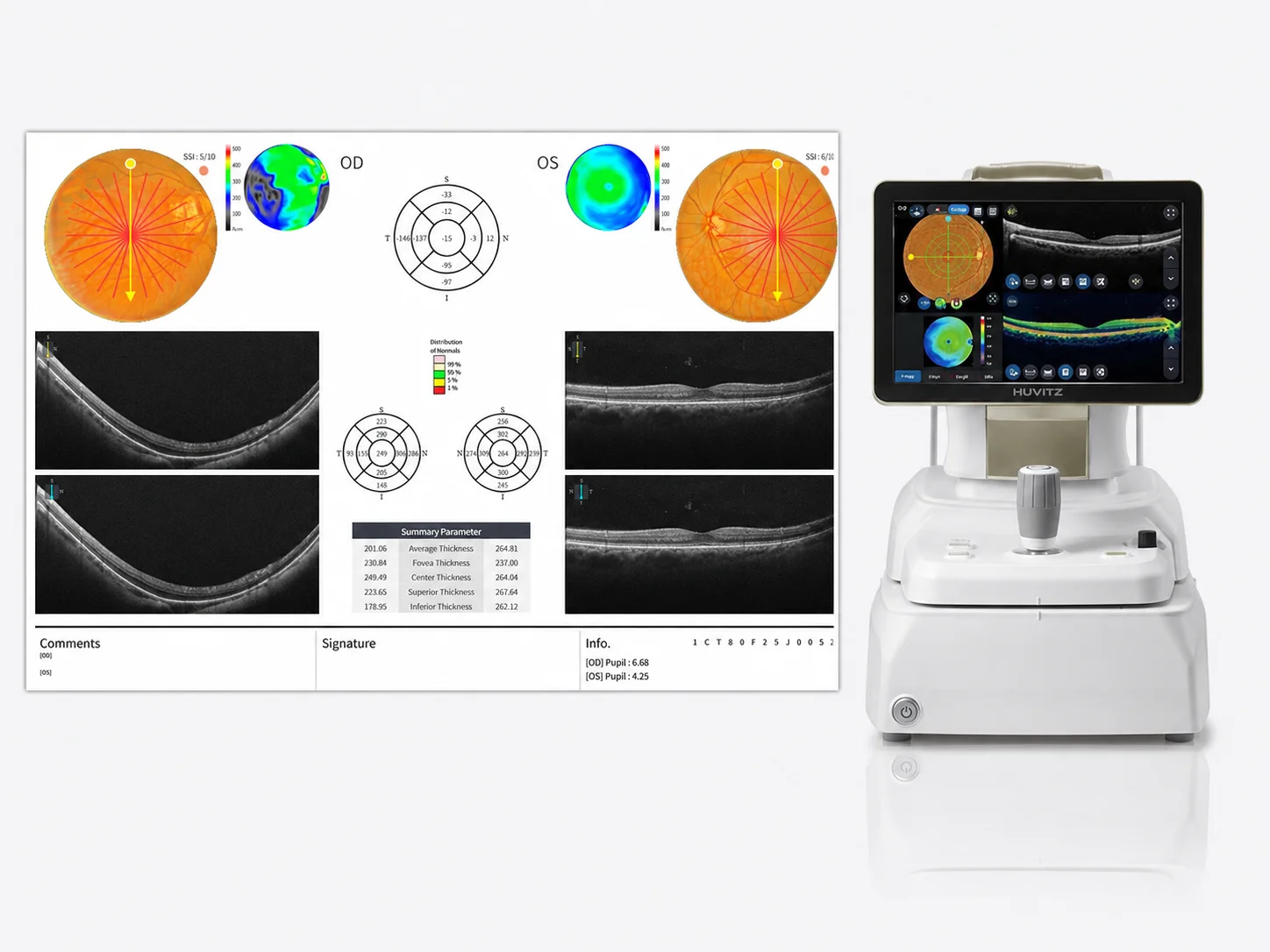
Spectral Domain-Optical Coherence Tomography (SD-OCT) Huvitz OCTavius
SD-OCT technology is used for fast and detailed retinal layer imaging
Fast
Non-invasive
High resolution 3D imaging
High sensitivity for detection of subtle changes in the retinal layers
Monitoring of disease progression and treatment response
Click on the image to zoom in
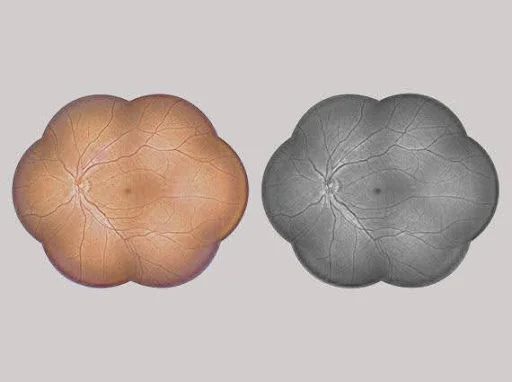
Fundus imaging
Colour retinal images optimised with high resolution and contrast - Better visualisation and documentation of abnormalities
Click on the image to zoom in
Childhood myopia control at NAMAH
Myopia-control treatment aims to slow further progression. Different options have different advantages, limitations, age ranges and fitting requirements. Thus, management plan is personalized for each child and carefully monitored on follow ups.
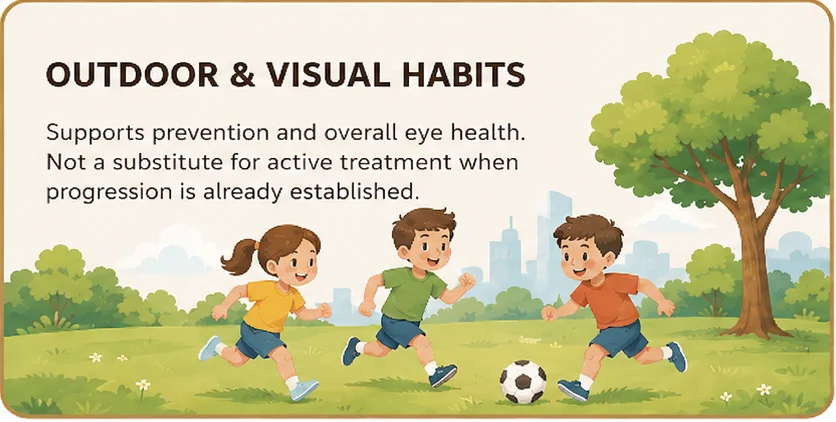
Outdoor time and visual habits
Outdoor exposure and controlled digital use appears to be most helpful in reducing the chance of myopia developing and progressing
Aim for regular outdoor time, ideally around two hours in daylight
Avoid very close viewing. Books and handheld devices should generally be kept at a comfortable working distance.
Plan breaks in prolonged study or screen sessions
Use adequate room lighting and avoid studying continuously in a dark room with only a bright device screen
Ensure the prescribed distance correction is worn as advised
Click on the image to zoom in
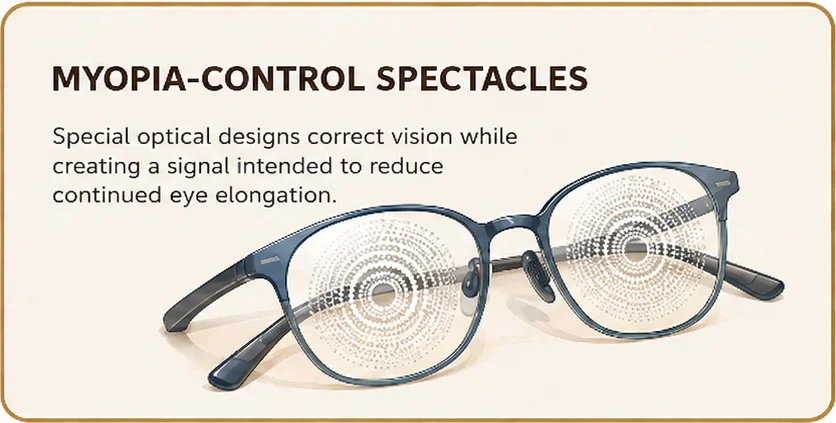
Myopia-control spectacle lenses
Specially designed spectacle lenses can correct distance vision while altering the peripheral or segmented optical signal reaching the retina.
No contact lens hygiene or eye-drop instillation is required
Can be used throughout the day for both vision correction and myopia-control intent
The frame must fit well and the optical centres and fitting heights must be measured accurately
Click on the image to zoom in
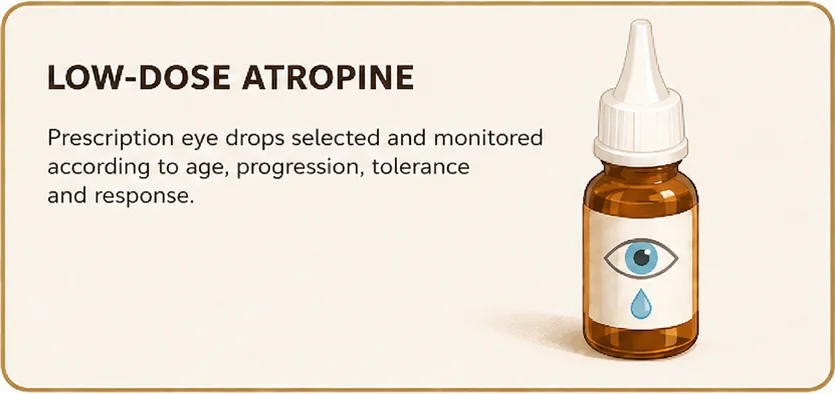
Low-dose atropine eye drops
concentrations is used in childhood myopia management to reduce the rate of progression. The concentration and duration are selected by the specialist.
The drops do not replace the child’s glasses and do not make reverse the myopia
Possible effects include light sensitivity, larger pupils, near blur, allergy or irritation. These are more likely with higher concentrations but vary between children
Periodic follow ups are essential
Click on the image to zoom in
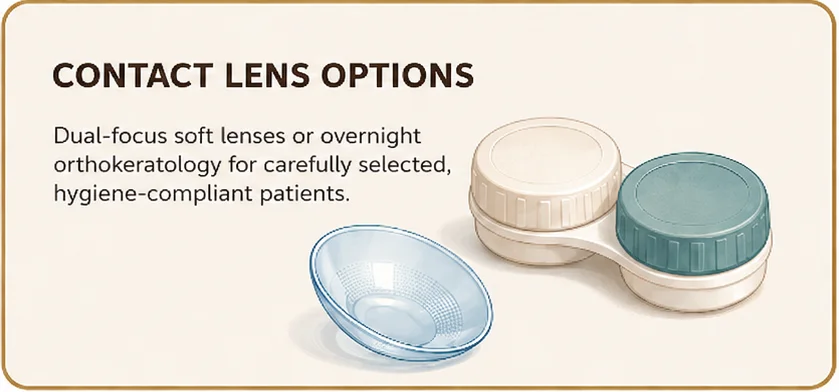
Contact lens options
Special type of lenses may help slow the progression of myopia. Suitability depends on age, prescription and ocular surface health. The child and parents receive fitting, hygiene and wearing instructions at the clinic.
Hands must be washed and dried before touching lenses
Lenses must never be exposed to tap water, saliva or non-prescribed solutions
Swimming or bathing with lenses should be avoided unless specifically advised
Pain, redness, light sensitivity, discharge or sudden blur requires prompt lens removal and eye examination
Click on the image to zoom in
Adult Myopia management:
Spectacles
High powers may produce minification, edge thickness or peripheral distortion, which can be reduced with suitable lens design and frame choice. Namah provides wide variety of options in the In-house Opticals studio.
Contact lenses
Contact lenses provide a wider field of view and less image-size reduction in high myopia, but require ocular surface suitability and strict hygiene. At Namah, contact lens fitting trial and training is provided.
Refractive surgery
LASER and lens-based refractive surgery options are provided based on the suitability of the patient. Know more
Peripheral Retinal degeneration
In patients with peripheral retinal degeneration such as lattice degeneration, retinal holes or tears, prophylactic retinal barrage laser procedure can be done to prevent retinal detachment. Know more
Myopic maculopathy
In the presence of macular changes due to myopia, some conditions may require intravitreal injections or vitreoretinal surgery in order to preserve central vision. Know more
Frequently Asked Questions
Can myopia be cured?
Current treatments can correct blurred vision and can often slow childhood progression, but they do not reliably reverse an already elongated eye. Refractive surgery may reduce spectacle dependence in adults, but it does not remove the underlying retinal risk of high axial myopia.
Will my child’s power definitely increase every year?
No. Progression varies between children and often slows with age, but younger onset and a strong family history increase the likelihood of continued change. Serial measurements provide more useful information than prediction from one visit.
Are ordinary glasses enough?
Ordinary single-vision glasses are excellent for clear vision and are entirely appropriate for many patients. In a child with meaningful progression risk, special myopia-control treatment may be discussed in addition to vision correction.
Should my child wear the full prescription?
In most cases, accurate full-time distance correction is advised. Intentional under-correction is not a proven way to slow myopia and may reduce distance vision, classroom performance or outdoor participation.
Is screen time the only reason children become myopic?
No. Genetics, age, growth, outdoor exposure and prolonged near work all interact. The practical focus should be balanced visual habits rather than blaming one device.
How much outdoor time is useful?
Many myopia-prevention programmes encourage about two hours of outdoor time daily when practical. The benefit is strongest for reducing onset risk; a progressing myopic child may still need active treatment.
What is axial length and why measure it?
It is the front-to-back length of the eye. Since most childhood myopia is associated with eye elongation, serial measurement helps assess progression more directly than spectacle power alone.
Does a longer eye always mean disease?
No. Axial length must be interpreted against age, body growth, refraction, ethnicity and retinal findings. The rate of change is often more useful than an isolated measurement.
Which atropine concentration is best?
There is no single concentration that is best for every child. The choice balances expected efficacy, side effects, age, progression and the formulation available. Response should be measured and the plan adjusted.
Will atropine remove the need for glasses?
No. Low-dose atropine is used to slow progression; it does not provide the optical correction required for clear distance vision.
Are myopia-control spectacles difficult to use?
Most children adapt well, but accurate fitting and consistent wear are important. Some children notice peripheral visual effects initially, and the frame must remain correctly positioned.
Are contact lenses safe for children?
They can be safe in carefully selected children who follow hygiene instructions and attend regular reviews. Water exposure, sleeping in non-approved lenses and continuing lens wear during redness or pain increase risk.