
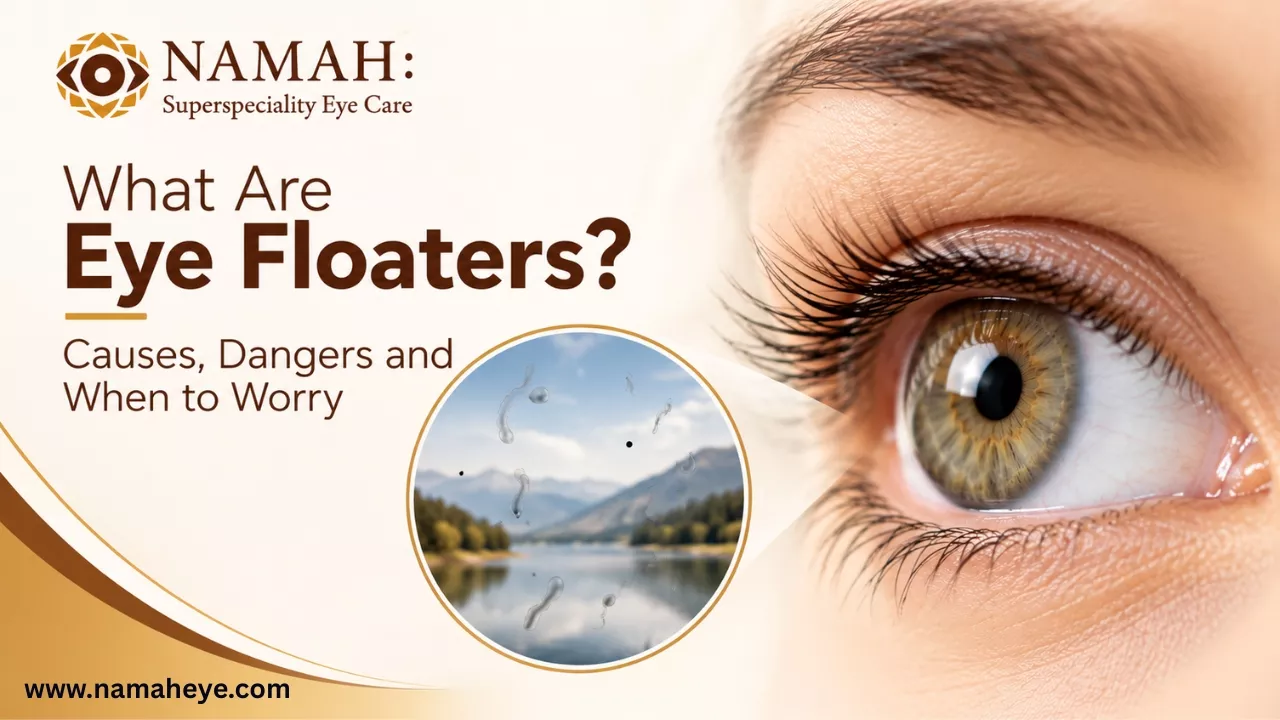
What Are Eye Floaters, and Are They Dangerous? A Clear Guide to Those Drifting Specks in Your Vision
You’re gazing at a bright blue sky, a white wall or a blank screen, and something small drifts across your vision. A speck, a squiggle or a tiny cobweb. You blink. It’s still there. You try to look straight at it, and it slips away like a shy fish.
If that sounds familiar, you’ve met eye floaters. Almost everyone does at some point, and most people wonder the same thing: “Is this normal, or is something wrong with my eyes?”
The honest answer is usually normal, occasionally urgent. This guide helps you tell the difference.
What Are Eye Floaters?
Eye floaters are small shapes that seem to drift through your field of vision. Doctors call them myodesopsia. They can look like:
- Dark or grey specks
- Thread-like strands or squiggly lines
- Cobwebs or rings
- Small, shadowy, semi-transparent blobs
Here’s a simple way to picture it. Your eye is filled with a clear, jelly-like substance called the vitreous. Over time, tiny fibres in that jelly can clump together. Light passing through the eye casts their shadows onto the retina, the light-sensitive layer at the back, and your brain registers those shadows as floaters.
Think of dust on a camera lens. The dust isn’t in the scene you’re photographing, but it shows up in every picture.
How Floaters Behave (And Why They’re So Annoying)
Floaters have some unmistakable habits:
- They move when your eyes move. They glide along with your gaze, then drift on after you stop.
- They dart away when you look directly at them. That’s what makes them so hard to “catch.”
- They’re most visible against plain, bright backgrounds. Think clear skies, white walls, snow, a blank document or a bright phone screen.
- Blinking doesn’t clear them. They’re inside the eye, not on its surface.
- You notice them more when you think about them. If you’ve spotted yours while reading this, you’re not imagining it.
What Causes Eye Floaters?
1. Natural ageing of the vitreous (the most common cause)
As we get older, the vitreous gradually becomes more liquid and shrinks. Its fibres clump into strands, and these cast the shadows you see. This is the same kind of ordinary change as grey hair or reading glasses.
2. Posterior vitreous detachment (PVD)
Eventually the shrinking vitreous can peel away from the retina. This is common after 50 and is often harmless, but it’s also when new floaters can appear suddenly, so it deserves a proper check.
3. Short-sightednes
People who are nearsighted are more likely to develop floaters, and often earlier in life.
4. Eye injury or previous eye surgery
Trauma, and sometimes complications after procedures such as cataract surgery, can disturb the vitreous.
5. Inflammation inside the eye
Conditions like uveitis can release inflammatory debris that appears as floaters.
6. Bleeding inside the eye
Blood cells in the vitreous can look like floaters. This can happen with diabetic eye disease, high blood pressure, blocked blood vessels or injury.
7. Retinal tears or detachment
These are the serious causes. The vitreous can tug on the retina hard enough to tear it, and fluid can then seep behind the tear and lift the retina away.
Who’s more likely to get floaters?
- People over 50
- People who are nearsighted
- People who’ve had eye injuries or eye surgery
- People with diabetes affecting the retina
- People with eye inflammation
What About Flashes of Light?
Floaters and flashes often get mentioned together, and they’re not the same thing.
Flashes (called photopsia) look like camera flashes, lightning streaks, sparks or flickering lights, often at the edge of your vision. They happen when the vitreous gel pulls on the retina, which makes the retina “see” light that isn’t there.
An occasional flash can be part of normal vitreous ageing. But floaters plus repeated flashes is a combination worth taking seriously.
Related Read : When Should I Visit a Retina Specialist? Signs You Should Know
So, Are Eye Floaters Dangerous?
In most cases, no. They’re a harmless, age-related change. They may be irritating, but they don’t damage your eye or threaten your sight.
But floaters can occasionally be an early warning of a retinal problem, and the difference often lies in how they appear.
Usually harmless
- A few floaters that have been there for a while
- No change in number, size or pattern
- No flashes of light
- Normal vision overall
Warning signs: seek help immediately
- A sudden shower of new floaters
- Flashes of light, especially in the same eye as the floaters
- A grey curtain or shadow creeping across your vision
- Blurred or distorted vision
- Loss of side (peripheral) vision
- Floaters that appear after an eye injury
These warning signs are usually painless, which is exactly why people ignore them. A retinal tear doesn’t hurt. If it’s missed, it can progress to a detached retina, which can lead to permanent vision loss.
The rule of thumb: Old, stable floaters are usually fine. New, sudden or flashing ones need an eye exam, quickly.
What Happens at the Eye Exam?
If you notice warning signs, your eye specialist will usually carry out a dilated eye examination. Drops widen your pupils so the doctor can see the vitreous and the entire retina clearly, checking for tears, bleeding, inflammation or detachment.
Eye doctors generally recommend having this exam within days of noticing new floaters or vision changes, and sooner if flashes or a shadow are present. If something is found, early treatment makes a significant difference to outcomes.
How Are Eye Floaters Treated?
Most of the time: no treatment at all
If your floaters come from normal ageing, the usual advice is to leave them alone. Your eye doctor will check that nothing dangerous is going on, then suggest regular follow-ups.
The brain adapts
Over weeks and months, the brain learns to ignore floaters. Many settle lower in the eye or drift out of your central vision. They may not disappear completely, but they stop being noticeable.
When treatment is needed
- Retinal tear: sealed with a laser procedure to prevent detachment
- Retinal detachment: repaired with surgery
- Bleeding or inflammation: treated according to the underlying cause
- Severe floaters that interfere with vision: a specialist may discuss options such as laser treatment in selected cases, or vitrectomy, a surgery that removes the vitreous gel and replaces it. Vitrectomy for ordinary age-related floaters is uncommon because it carries risks of its own, so it’s reserved for cases where vision is genuinely affected.
Please skip these
- Don’t try “eye floater cures” from ads or social media.
- Don’t rub or press your eyes.
- Don’t assume supplements or eye exercises will dissolve floaters, as there’s no reliable evidence that they do.
Everyday Habits That Protect Your Retina
You can’t stop the vitreous from ageing, but you can look after the retina behind it:
- Get regular eye check-ups, especially after 40, if you’re nearsighted or if you have diabetes
- Keep blood sugar and blood pressure under control
- Wear protective eyewear during sports, DIY and risky work
- Take new floaters, flashes or shadows seriously, even if they seem mild
- Don’t wait to “see if it settles” when warning signs appear
- Know your baseline. If you know what your normal floaters look like, you’ll spot a change faster.
Conclusion
So, what are eye floaters, and are they dangerous?
Most of the time, eye floaters are a harmless side effect of the eye ageing naturally. They’re bits of vitreous gel casting small shadows, and the brain learns to tune them out. But in a small number of cases, they’re the first sign of a retinal tear or detachment, where timing is everything.
Remember this simple checklist:
- A few steady, familiar floaters: usually nothing to worry about, but mention them at your next eye exam.
- A sudden burst of new floaters: get your eyes examined promptly.
- Flashes of light: don’t ignore them, especially alongside floaters.
- A curtain or shadow across your vision: treat it as an emergency and see an eye specialist immediately.
- Diabetes, nearsightedness or a past eye injury: book regular dilated eye exams.
Your eyes rarely send loud alarms. Often it’s a quiet change, one extra speck or one unusual flash, that matters. If you’re ever unsure, don’t wait or search for reassurance online. A thorough eye examination at Namah Superspeciality Eye Care can either put your mind at ease or catch a problem early, while your sight is still easiest to protect.